第 8 月 · 天象指南
八月天象
八月是英仙座的月份,对许多观测者来说也是全年综合条件最好的一个月:夏季银河仍然很高,夜在重新变长,而第一批秋季目标已经在黎明前升起。
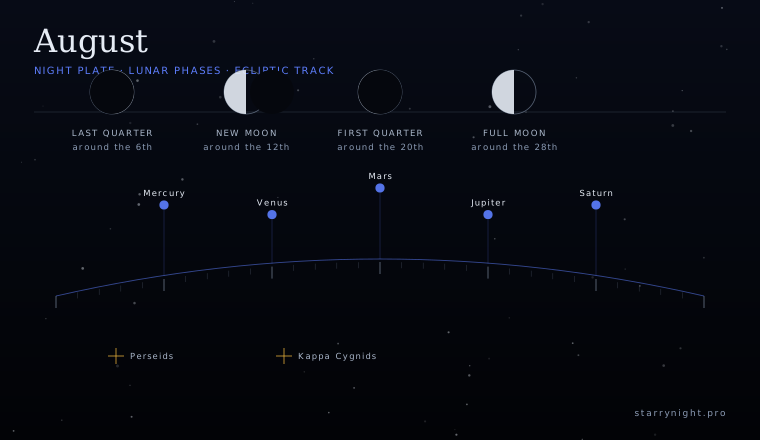
本月天象概览
入夜时夏季大三角位于头顶,银河穿过天鹰、盾牌与人马座,最为浓密。随着夜色推进,天球转动,到凌晨两点左右银河几乎竖立起来,从东北一直垂到南地平线。英仙座流星雨在 8 月 12 至 13 日夜间极大,而这一年极大期正接近新月,流量应该能接近这场流星雨的上限。到月底,仙女座与飞马座在东方升得很高,秋季天空的迹象开始出现。
本月一览
八月以渐亏的月亮开场,到6日下弦月前后,清晨时段变得黑暗——这正是英仙座流星雨所需要的。新月在12日前后到来,与本流星雨极大期只差几个夜晚:这是多年来最好的流星观测时机。天刚暗下后的一两个小时里,人马座和盾牌座星云仍高挂南方,而天鹅座大裂缝在极大期前的暗夜里最为醒目。M13、M92和环状星云M57在上半夜都很高、很容易找到,所以小望远镜在等流星时也有很多目标可看。午夜后,仙女座星系M31从东北方爬升,是秋天将至的迹象。20日前后上弦月带来晚间的月亮,阿彭宁山脉附近明暗界线细节出色;28日前后满月为一个既奖励暗夜观测者、也奖励月面观测者的月份收尾。
行星详情
水星本月基本无法观测:8月中旬发生太阳合,它离太阳太近,派不上用场。金星是最容易看到的——非常明亮,但低悬在西方暮光中,所以需要通透的地平线,并在天色渐暗时耐心寻找。本月晚些时候,金星开始呈现月牙相位,如果大气稳定,小望远镜里会很好看。火星是晨星,约01:00升起,并朝着下一次冲日缓慢增亮;它仍然很小,但那淡红色彩不会认错。木星是位置最好的晨间行星,在黎明前两小时高得足以进行有用的望远镜观测,可看云带和四颗伽利略卫星。土星在傍晚中段升起,后半夜位置都很好,光环接近全年最宽——是行星中最突出的望远镜目标。
流星雨与暗夜窗口
英仙座流星雨是本月主角,而月亮的配合难得地好。6日下弦月让清晨保持黑暗,那正是流星雨状态最好的时候。12日新月使8月12—13日的极大夜处在真正黑暗的天空中——时机极佳,暗处每小时最多100颗,郊区花园通常50—60颗。辐射点在东北方英仙座,所以午夜后它升得更高,流量也更好;在那之前,可以留意偶尔出现的长轨迹。天鹅座κ流星雨在17日前后极大,但每小时不到5颗,属于小流星雨,当作额外奖励就好。12日之后月亮渐盈,20日上弦月带来晚间月光,28日满月把天空照得很亮。因此真正的暗夜窗口是6日前的清晨和12日前后那几晚。
安排你的观测夜
每个晴朗傍晚都从夏季银河开始,它高悬天顶,从天鹰座穿过天鹅座;日落后头一两个小时最适合观看。第一周属于清晨:6日下弦月让清晨保持黑暗,所以不妨在黎明前先看看英仙座流星雨。第一周提示:让眼睛适应二十分钟,只用红光。第二周是主戏。12日前后新月恰逢英仙座流星雨极大;午夜后,东北方英仙座的辐射点升得更高。提示:躺在躺椅或毯子上看,因为流星满天都是,不只出现在辐射点。月中旬黎明前,木星和火星在东方相聚,离日出两小时。第三周提示:留意结露,给目镜备一块布。八月下旬午夜后,M31从东北方升起。第四周提示:看M31用侧视法——稍微看向它旁边。20日上弦月和28日满月会照亮夜空,所以深空观测要围绕它们安排。
月相
- Last quarter around the 6th Dark early mornings, which is when the Perseids are best.
- New Moon around the 12th Excellent timing this year — the Perseid peak falls within a few nights of new Moon.
- First quarter around the 20th Evening Moon; good terminator detail around the Apennines.
- Full Moon around the 28th Bright end to the month; a good time for lunar observing and for double stars.
月相日期为近似值(UTC),出行前请核对当年度天文年历。
本月行星
- Mercury In solar conjunction mid-month; effectively unobservable.
- Venus Low in the western twilight but very bright; a crescent phase begins to show later in the month.
- Mars A morning object, rising around 01:00 and slowly brightening toward its next opposition.
- Jupiter The best-placed morning planet — high enough for useful telescope work in the two hours before dawn.
- Saturn Rises in mid-evening and is well placed for the rest of the night; the rings are close to their widest for the year.
流星雨
-
Perseids
- Peak
- night of 12–13 August
- Rate
- up to 100 per hour at a dark site; typically 50–60 from a suburban garden
The most popular shower of the year in the northern hemisphere. Radiant in Perseus, which climbs higher after midnight. Fast, bright meteors with persistent trains.
-
Kappa Cygnids
- Peak
- around 17 August
- Rate
- under 5 per hour
A minor shower with slower meteors, sometimes producing bright fireballs.
本月亮点
- The Perseids peak within a few nights of new Moon — the best meteor timing in several years.
- The Sagittarius and Scutum star clouds are still well placed at dusk for the first hour or two.
- M13, M92 and the Ring Nebula M57 are all high and easy in the first half of the night.
- The Andromeda Galaxy M31 is rising in the north-east after midnight, a sign of autumn.
- The Great Rift through Cygnus is at its most striking on the dark nights before the peak.
逐夜日历
| 时间窗口 | 事件 | 观测方位 |
|---|---|---|
| All month, after dusk | Summer Milky Way | Overhead, from Aquila through Cygnus |
| 12–13 August, after midnight | Perseid meteor shower | Radiant in Perseus, north-east |
| Around the 12th | New Moon | Dark skies coincide with the Perseid peak |
| Mid-month, pre-dawn | Jupiter and Mars together | East, two hours before sunrise |
| Late August, after midnight | M31 Andromeda Galaxy | North-east, climbing steadily |
野外提示
看英仙座流星雨时,辐射点的重要性比你想的低——流星出现在全天各处。所以面朝视野最暗最开阔的方向,然后躺下来。躺椅或地垫永远胜过站着。统计流星时只计固定方向上看到的那些,并记下时间:午夜前后和午夜之后的计数不能直接比较,因为辐射点位置决定了你处在漂向地球的哪一侧。
免责
StarryNight 是面向业余观测者的资料性参考。本站内容不构成专业天文、导航或安全建议——出发去暗夜地点前,请查阅最新天文年历并确认当地天气。
同一页的英文版:The sky in August