 Northern sky
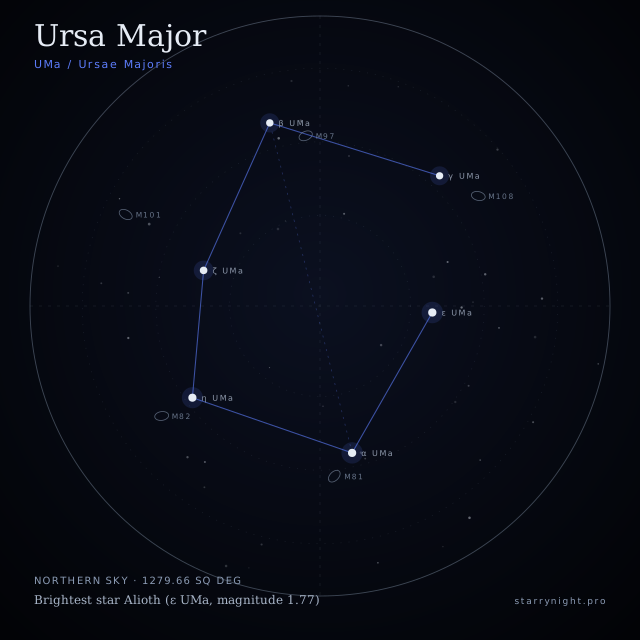
Ursa Major UMa
Ursa Major is the third-largest constellation and the one most people can actually find, because its seven brightest s…
Sky map · every node opens a sheet
Constellation reference sheets and month-by-month sky guides, written for people who actually stand outside with binoculars.
15 published constellation sheets, grouped into four sky-zone wedges. Sheets still on the drip schedule appear in the upcoming list below.
By 21:00 the Great Square of Pegasus is on the meridian, with Andromeda and M31 trailing to its north-east, and the Double Cluster in Perseus high in the north-east. The Milky Way runs from Cygnus down through Cepheus and Cassiopeia toward the north-west, fainter than in summer but still visible from a dark site. In th…
Read the month guide
Northern sky
Ursa Major is the third-largest constellation and the one most people can actually find, because its seven brightest s…
 Northern sky
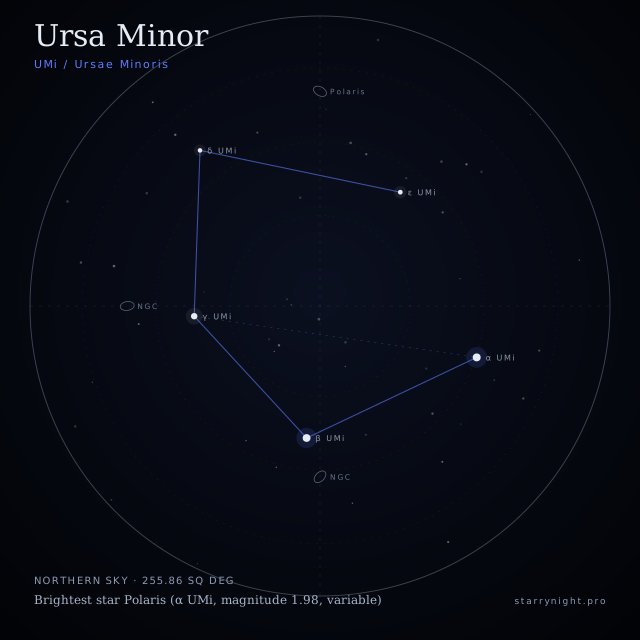
Ursa Minor is a small, faint bear whose tail ends at Polaris. It is the constellation that does not move: the whole sk…
 Northern sky
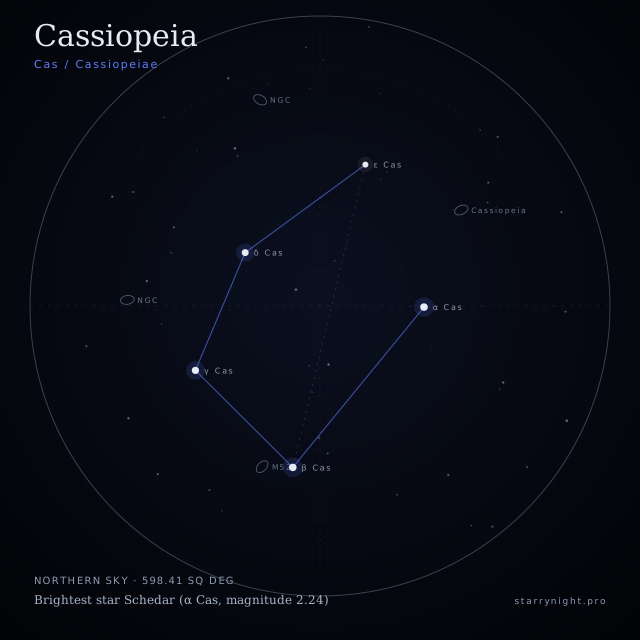
Cassiopeia is the W-shaped constellation opposite the Big Dipper across the pole. In autumn it stands high overhead; i…
 Northern sky
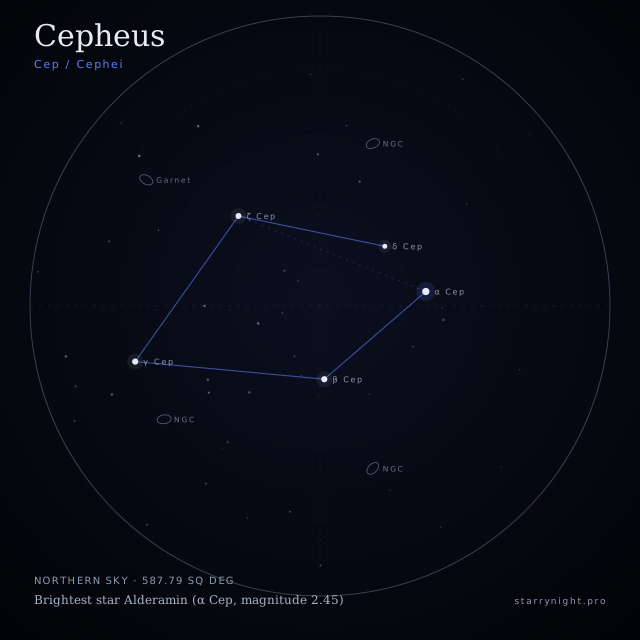
Cepheus is a dim house-shaped outline wedged between Cassiopeia and the pole. It matters far out of proportion to its …
 Northern sky
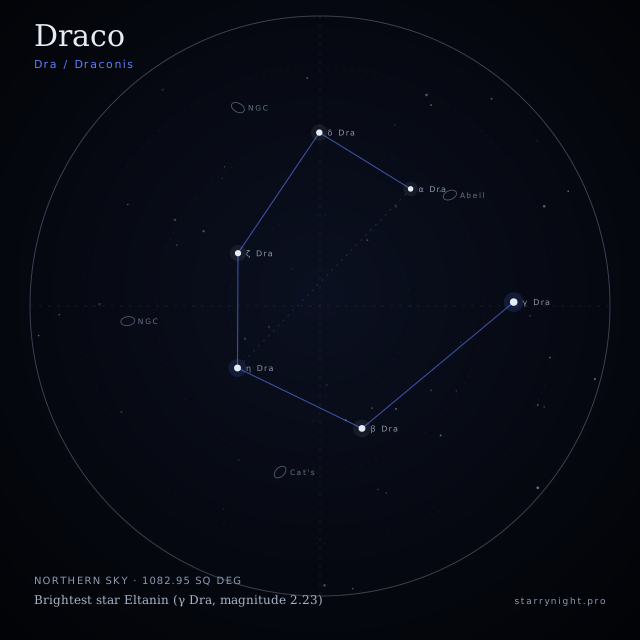
Draco winds a long, faint body around the north pole, starting between the two bears and ending with a four-star head …
 Northern sky
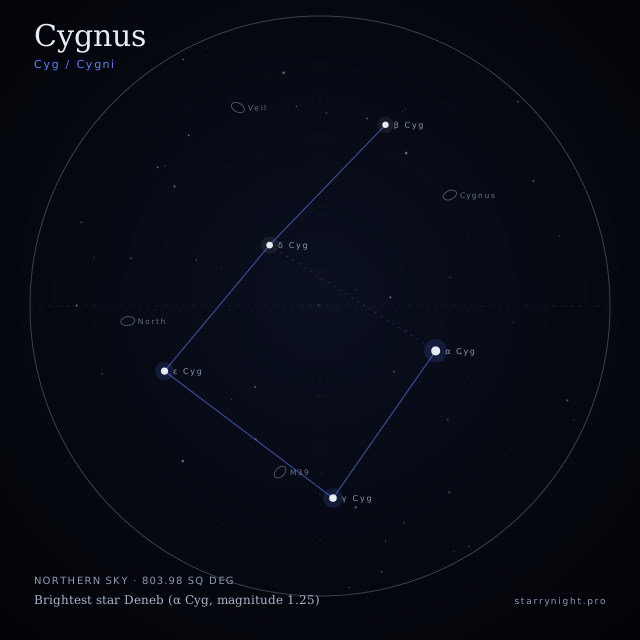
Cygnus flies down the Milky Way with its wings outstretched, a giant cross of stars that doubles as the best naked-eye…
Monthly
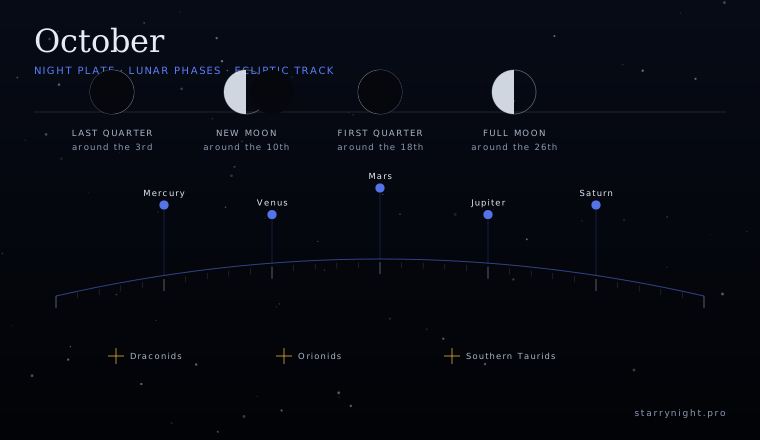
October brings the autumn deep-sky fields to the meridian, the Orionids, and the return of the Pleiades. The nights are now long e…
 Monthly
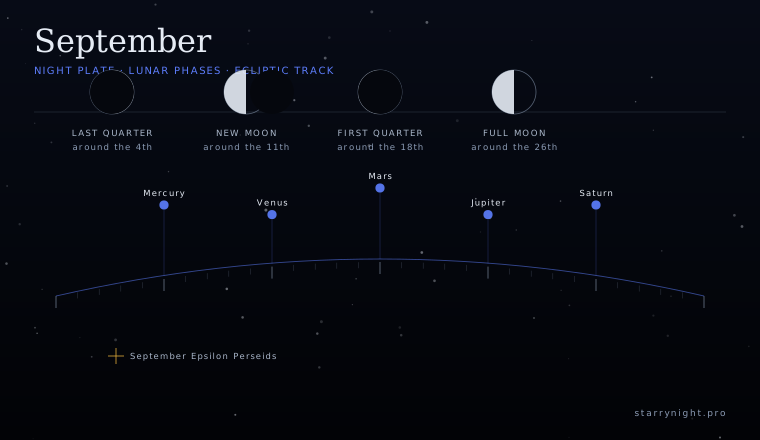
September is the pivot of the observing year. The summer Milky Way is still there in the west, the autumn galaxies are rising in t…
 Monthly
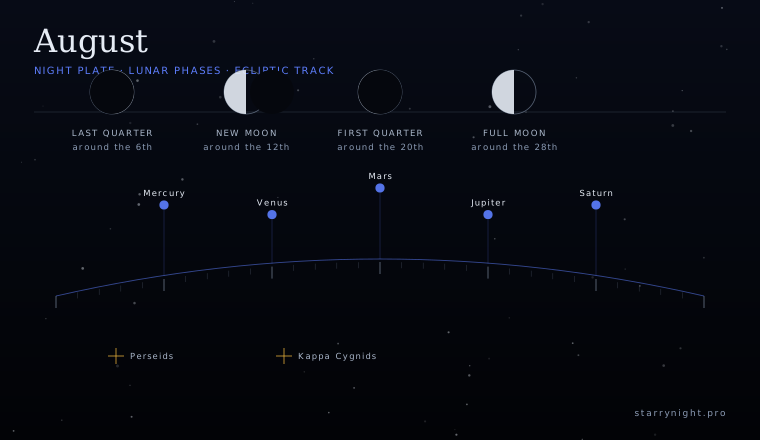
August is the Perseid month and, for many observers, the best all-round month of the year: the summer Milky Way is still high, the…
 Monthly
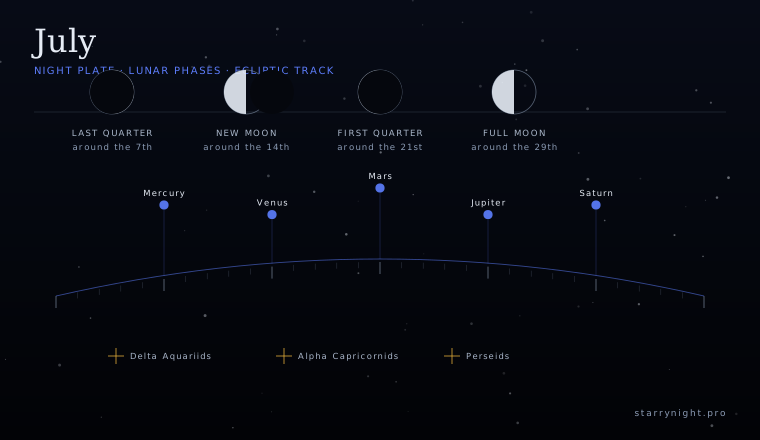
July is the month the summer Milky Way finally delivers. Sagittarius and Scorpius reach their highest point, and from a dark site …
StarryNight is an informational reference for amateur observers. Nothing here is professional astronomical, navigational or safety advice — always check a current almanac and your local weather before travelling to a dark site.