 Northern sky
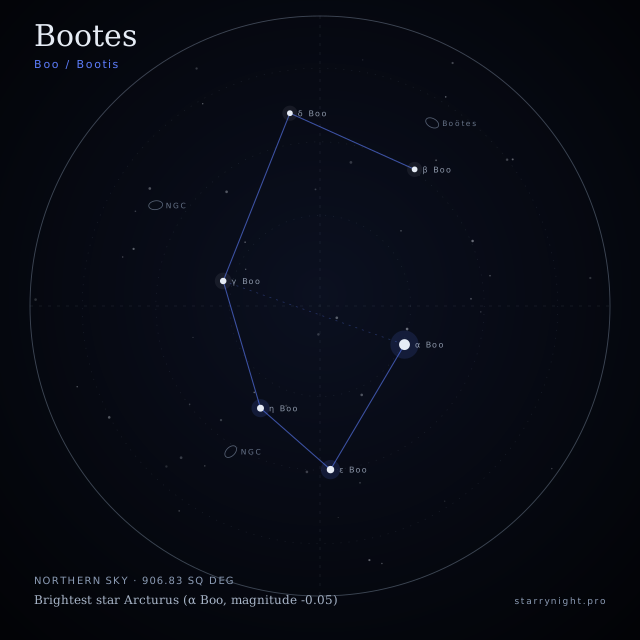
Bootes Boo
Boötes is a kite-shaped constellation anchored by Arcturus, the brightest star in the northern celestial hemisphere an…
15 published sheets
Each sheet carries the catalogue values, the naming story, a star-hop route and observing notes. Sheets are grouped by sky zone so you can plan a session by season and latitude.
Circumpolar from mid-northern latitudes — visible all year round.
Northern sky
Boötes is a kite-shaped constellation anchored by Arcturus, the brightest star in the northern celestial hemisphere an…
 Northern sky
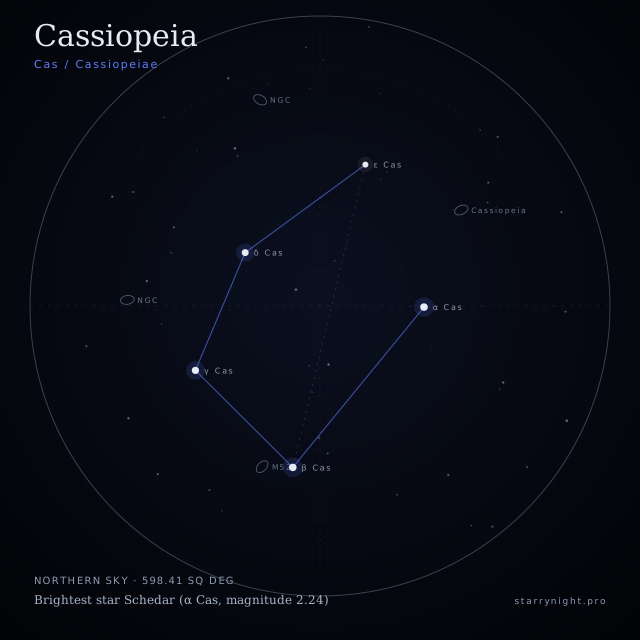
Cassiopeia is the W-shaped constellation opposite the Big Dipper across the pole. In autumn it stands high overhead; i…
 Northern sky
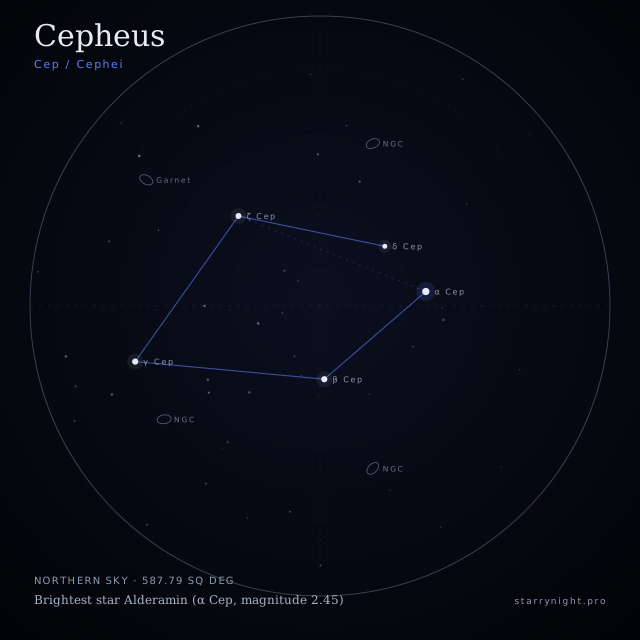
Cepheus is a dim house-shaped outline wedged between Cassiopeia and the pole. It matters far out of proportion to its …
 Northern sky
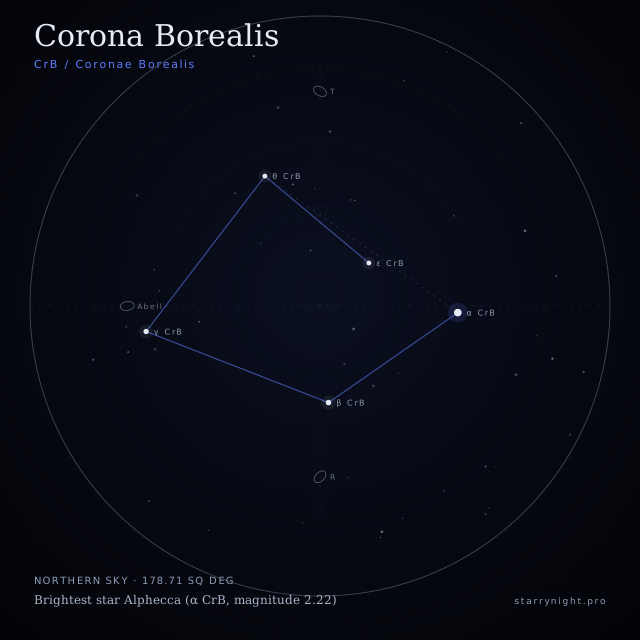
A small, tidy semicircle of stars between Boötes and Hercules — the only crown in the sky that genuinely looks like a …
 Northern sky
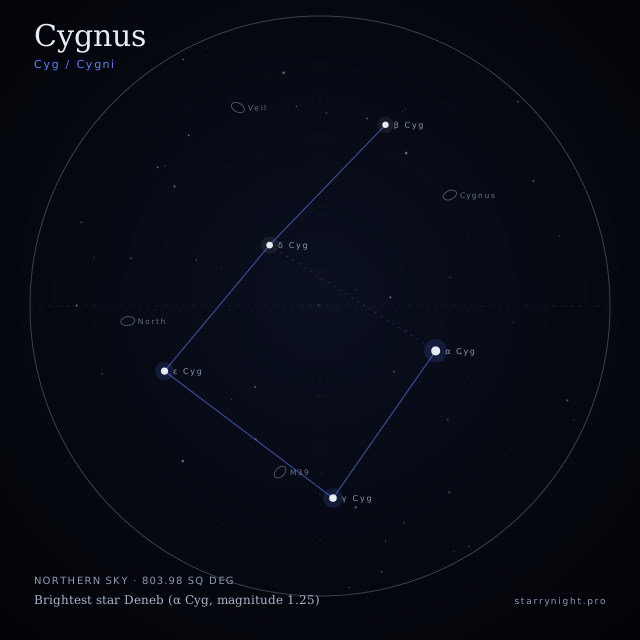
Cygnus flies down the Milky Way with its wings outstretched, a giant cross of stars that doubles as the best naked-eye…
 Northern sky
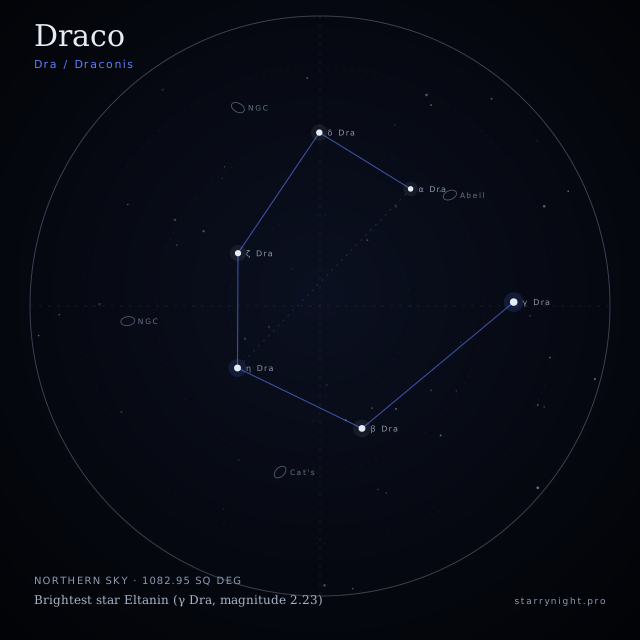
Draco winds a long, faint body around the north pole, starting between the two bears and ending with a four-star head …
 Northern sky
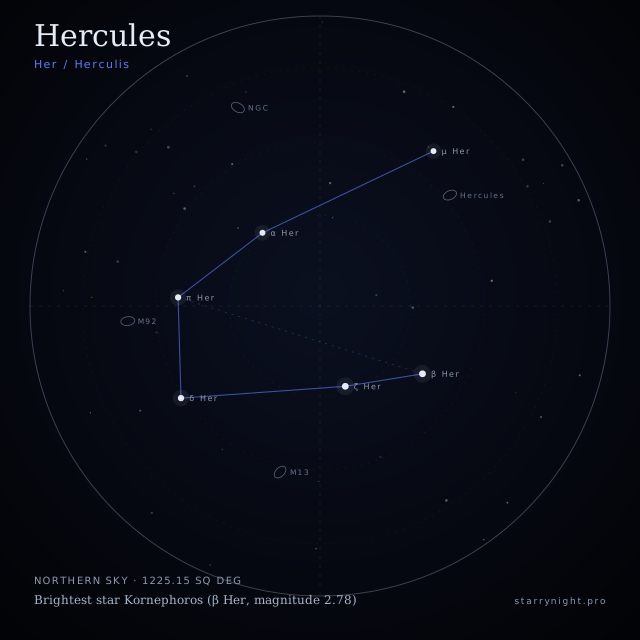
Hercules is a large but faint constellation — four stars forming the Keystone at its centre, with the rest of the hero…
 Northern sky
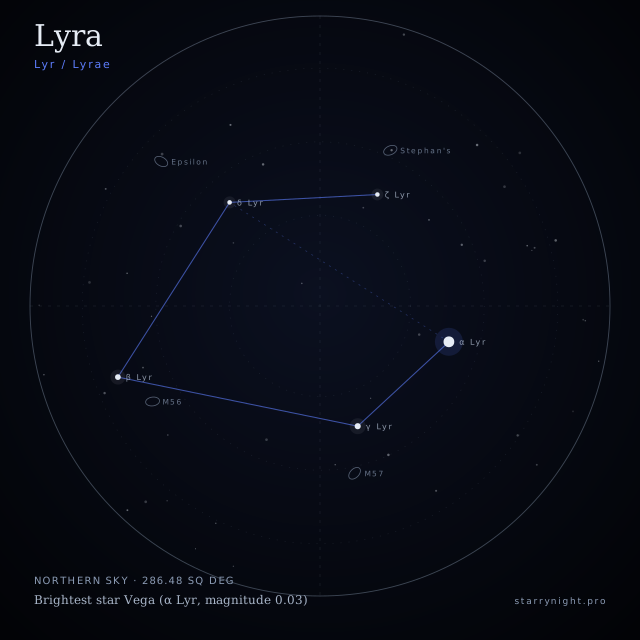
Lyra is small and bright: a neat parallelogram of stars hanging from Vega, the fifth-brightest star in the night sky a…
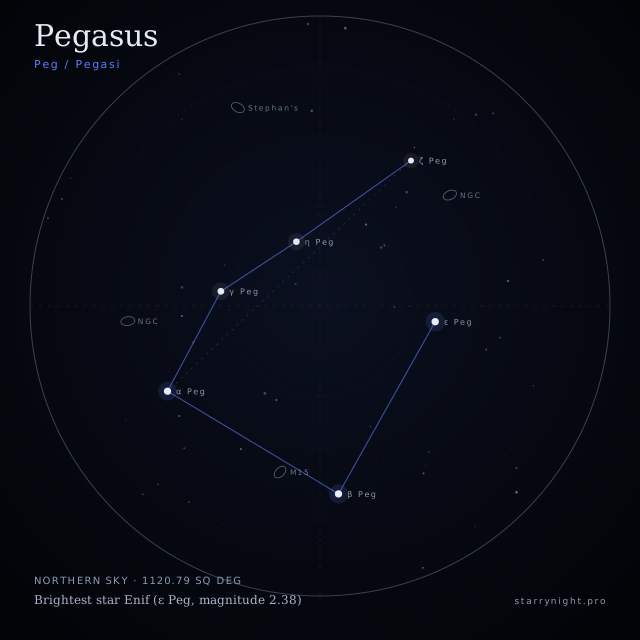 Northern sky
Pegasus is best known for the Great Square — four stars marking the horse's body, with only the head and forelegs draw…
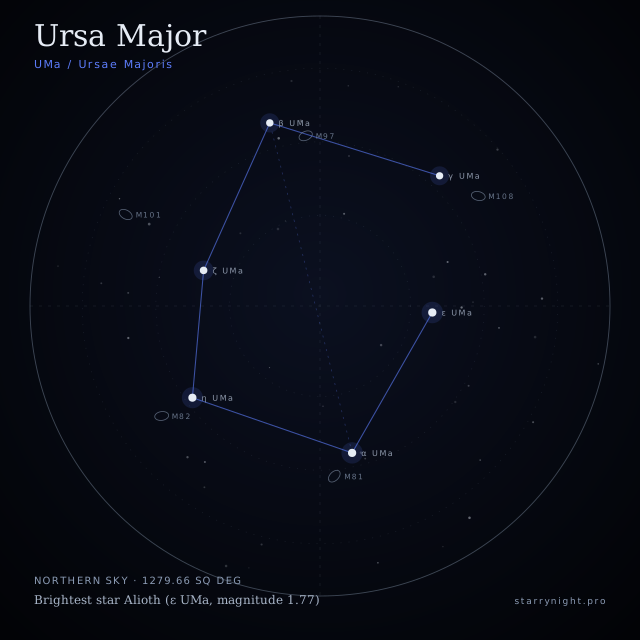 Northern sky
Ursa Major is the third-largest constellation and the one most people can actually find, because its seven brightest s…
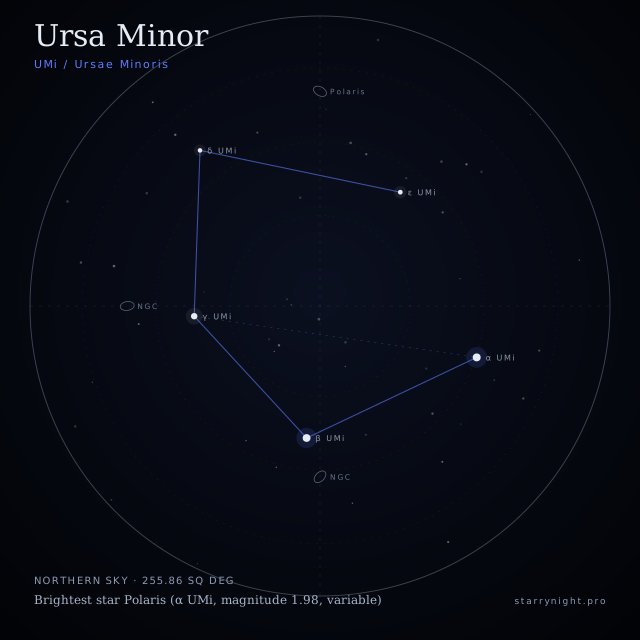 Northern sky
Ursa Minor is a small, faint bear whose tail ends at Polaris. It is the constellation that does not move: the whole sk…
Straddling the celestial equator, so both hemispheres get a share.
The ecliptic highway — where the Moon and planets do their travelling.
Requires a southern vantage point; the richest part of the Milky Way.